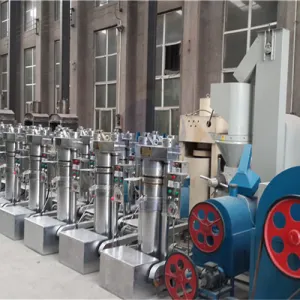
As a factory manager or technical lead, your decision on sesame oil press selection directly impacts production efficiency, product consistency, and long-term operational costs. With capacities ranging from 500 kg/h to over 2 tons per hour—and automation levels that can vary from semi-automatic to fully integrated systems—it’s critical to match equipment not just with volume needs, but with process goals like oil quality, energy use, and maintenance burden.
If your daily output is between 1–2 tons of sesame oil, a medium-scale press (e.g., 500–1000 kg/h) offers flexibility without excessive capital investment. For larger facilities producing 3+ tons/day, a high-capacity machine (1200–2000 kg/h) ensures consistent throughput and reduces labor per unit. Real-world data shows that factories using presses sized too small often see bottlenecks—leading to idle time and inconsistent batch quality.
| Press Type | Typical Capacity | Best Use Case |
|---|---|---|
| Medium (Auto-Semi) | 500–1000 kg/h | Small-mid factories, niche premium oils |
| Large (Fully Auto) | 1200–2000 kg/h | High-volume producers, export-focused plants |
Cold pressing retains more nutrients—especially polyphenols and vitamin E—but typically yields 5–8% less oil than hot pressing. If you're targeting health-conscious markets (like Europe or North America), cold-pressed sesame oil commands up to 20% higher margins. However, hot pressing (at 70–90°C) boosts yield by 10–15%, ideal for bulk food-grade applications where cost-efficiency matters most.
Pro Tip: Many modern presses now allow switching between cold and hot modes within minutes—giving you the best of both worlds based on market demand.
A fully automated system may cost 20–30% more upfront, but it cuts labor needs by 40% and improves consistency across batches. In regions like Germany or UAE, where skilled labor is expensive and compliance strict, this ROI becomes clear within 12 months. Our clients report reduced operator errors by up to 70% after upgrading from semi-auto to full-auto setups.
Common pain points such as inconsistent oil clarity or frequent motor tripping? These often stem from poor calibration—not faulty hardware. Always schedule quarterly performance audits using built-in diagnostics tools available on newer models.
A mid-sized facility in Gujarat switched from a manual screw press to a 1500 kg/h automatic model with dual-temperature control. By optimizing pre-heating temperature (from 65°C to 82°C) and reducing grain moisture content to under 6%, they achieved an average oil extraction rate increase from 48% to 53%. That’s an extra 300 kg of oil per day—without adding staff.
Ready to optimize your sesame oil production? Download our free PDF checklist: “Daily Maintenance Checklist for Industrial Sesame Oil Presses” — used by over 200 factories worldwide to reduce unexpected breakdowns by up to 45%.





.jpg?x-oss-process=image/resize,m_fill,h_300,w_300/format,webp)