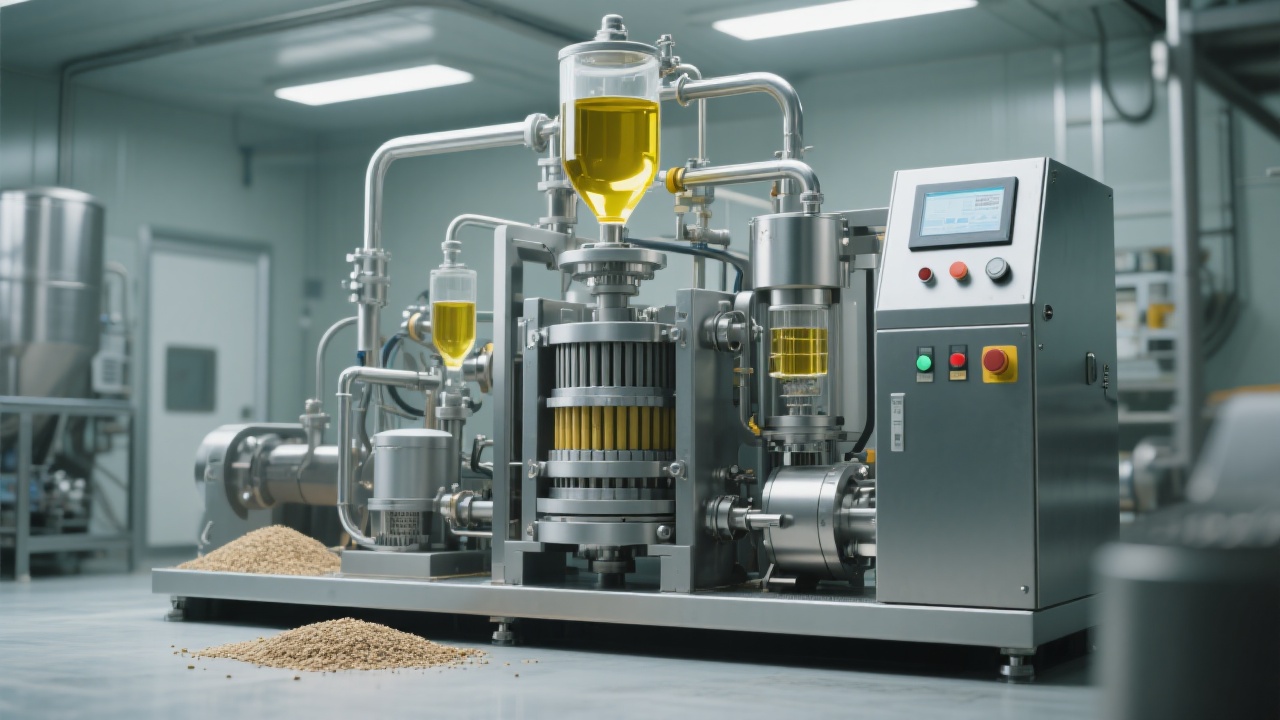
As consumer demand for high-quality sesame oil with authentic aroma and nutritional benefits surges, small-scale producers face persistent challenges during the oil extraction process. Two of the most frequent obstacles—equipment blockages and low oil yield—can dramatically impact productivity and product quality. This guide delves into the core extraction workflow of mini sesame oil machines, detailing actionable strategies to optimize performance, enhance oil output by over 30%, and maintain the natural essence of sesame seeds.
Successful sesame oil pressing starts with the foundation: raw sesame seed quality. Selecting seeds with appropriate moisture content (ideally 5-7%) and oil concentration (40-55%) ensures efficient extraction. Implementing rigorous cleaning procedures is crucial to eliminate impurities—such as dust, stems, and stones—that often cause device clogging.
A recommended cleaning workflow involves air aspiration combined with sieving and magnetic separation. This multi-step process can reduce foreign particle inclusion by up to 90%, substantially lowering the risk of equipment blockage and improving oil clarity.

Choosing between cold and hot pressing modalities affects not only the flavor profile but also the nutritional retention of sesame oil. Cold pressing involves mechanical extraction below 50°C to preserve delicate antioxidants and natural fragrance, ideal for premium oils with rich aroma but typically yields 5-10% less oil.
Conversely, hot pressing (often 80-120°C) increases oil release by breaking down seed cell walls, boosting extraction yield by approximately 10-15%. However, excessive heat may degrade nutrients and alter flavor. A hybrid approach—preheating seeds to 50-60°C before cold pressing—can strike a balance by improving yield without compromising quality.
At the heart of mini sesame oil machines lies the screw press, whose efficiency depends on precise adjustment of pressure, rotation speed, and temperature. Manufacturers recommend starting with moderate pressures (25-35 MPa) and screw speeds of 10-15 RPM, gradually tuning these against the oil content and variety of sesame seeds.
Maintaining optimal pressure prevents seed cake pack-up, a dominant cause of blockages. Lower screw speed allows longer seed residency time, enhancing oil extraction without overheating the material. Continuous monitoring of outlet cake moisture and temperature can provide feedback for dynamic parameter adjustment, translating to up to 30% better oil recovery.

Blockages usually arise from inadequate seed preparation, inconsistent feed rates, or mechanical wear in the press chamber. To mitigate:
Low oil yield often correlates with insufficient seed crushing or improper parameter settings. Enhancements include upgrading the screw shaft design with variable pitch zones and incorporating real-time temperature control.
A small sesame oil workshop in Jiangsu province incorporated these optimizations using a mini screw press. By standardizing seed moisture, implementing preheating at 55°C, and fine-tuning pressure to 30 MPa, they experienced a 32% increase in oil yield within just two production cycles, while preserving the oil's signature nutty flavor—a testament to measurable operational improvements.

Expert Tip: Consistent raw material quality and precision screw press calibration are fundamental to maximizing sesame oil extraction efficiency and maintaining premium product integrity. Continuous process monitoring is essential to adapt to seasonal seed variations.
 389
|
389
|
 premium peanut oil production process
hot pressing vs cold pressing peanut oil
peanut oil raw material pre-treatment
premium peanut oil production process
hot pressing vs cold pressing peanut oil
peanut oil raw material pre-treatment
 227
|
medium-sized peanut oil extraction machine
high-efficiency eco-friendly technology
African European market
227
|
medium-sized peanut oil extraction machine
high-efficiency eco-friendly technology
African European market
 149
|
multifunctional peanut oil refining equipment
peanut oil processing equipment for large-scale production
refining equipment to increase export sales
149
|
multifunctional peanut oil refining equipment
peanut oil processing equipment for large-scale production
refining equipment to increase export sales
 384
|
premium peanut oil production
oil extraction processes
quality refining techniques
384
|
premium peanut oil production
oil extraction processes
quality refining techniques
.jpg?x-oss-process=image/resize,h_300,m_lfit/format,webp) 148
|
cold pressed sesame oil
hot pressed sesame oil
sesame oil nutrition
sesame oil extraction methods
sesame oil health benefits
148
|
cold pressed sesame oil
hot pressed sesame oil
sesame oil nutrition
sesame oil extraction methods
sesame oil health benefits





.jpg?x-oss-process=image/resize,m_fill,h_300,w_300/format,webp)