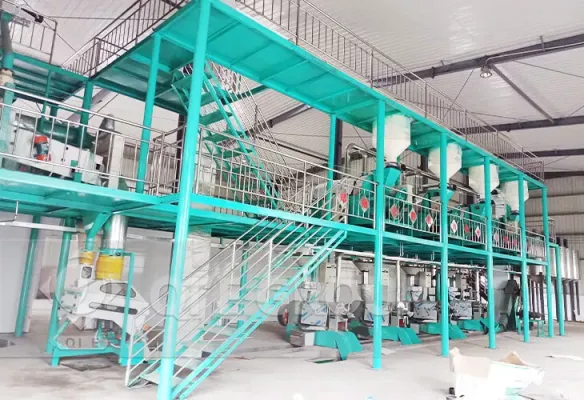
Sesame oil production involves a complex process starting from sesame seed pre-treatment to the refined final product. The choice between industrial-grade and small-scale sesame oil manufacturing equipment significantly influences both the efficiency and quality outcomes. This analysis explores core production stages, comparing these equipment categories on pressing efficiency, solvent extraction impact, temperature management, and filtration precision. The insights offered serve as a data-driven guide for manufacturers ranging from artisanal producers to large-scale factories, facilitating informed decisions in equipment selection and process optimization.
The typical sesame oil production workflow encompasses three pivotal steps:
| Performance Indicator | Industrial Equipment | Small-Scale Equipment |
|---|---|---|
| Oil Yield (%) | 55-60% | 40-50% |
| Energy Consumption (kWh/ton) | 150-180 | 200-250 |
| Temperature Control Accuracy (°C) | ±1 | ±5 |
| Operational Stability (Hours/day) | 24 (continuous) | 6-8 |
While mechanical pressing is predominant, solvent extraction complements oil recovery from residual cake, elevating yields by approximately 15-20%. However, the choice of solvent and process parameters crucially influence flavor profiles and nutritional integrity. Industrial extraction setups typically include high-precision solvent recovery units and stringent temperature controls, minimizing oxidative degradation. Small-scale solvent extraction equipment often struggles with solvent residue removal and consistent extraction temperatures, potentially affecting oil purity.
Maintaining optimal temperature during pressing and extraction is vital for preserving sesame oil’s characteristic aroma and antioxidants such as sesamol and sesamin. Industrial equipment often features advanced temperature monitoring and control systems with deviations kept within ±1°C, significantly reducing oxidation and ensuring consistent oil color and scent. In contrast, small-scale units’ broader tolerance (±5°C) can occasionally cause thermal stress, resulting in darker oil hues and subtle off-flavors.
The final refining stages involving filtration and degumming significantly influence oil clarity and shelf stability by removing phospholipids and particulate impurities. Industrial-scale filtration uses multi-stage fine filters and centrifugation, achieving turbidity levels below 2 NTU (Nephelometric Turbidity Units). Small-scale operations generally rely on simple mesh or gravity filtration, which may leave residual particles affecting the sensory attributes and oxidizability.
Practical assessments across varied production scales confirm that industrial equipment yields more uniform and higher-quality sesame oil, with batch-to-batch variance as low as 3%. Small-scale producers gain flexibility and lower upfront costs but face challenges in consistent output and process reproducibility. Strategic parameter optimization—such as seed moisture content and pressing pressure—can mitigate some disparities.

Common production issues include unexpectedly low oil yields and off-odors. These often stem from:
Troubleshooting demands a systematic check of equipment calibration, temperature consistency, and raw material standards to restore optimal operation swiftly.
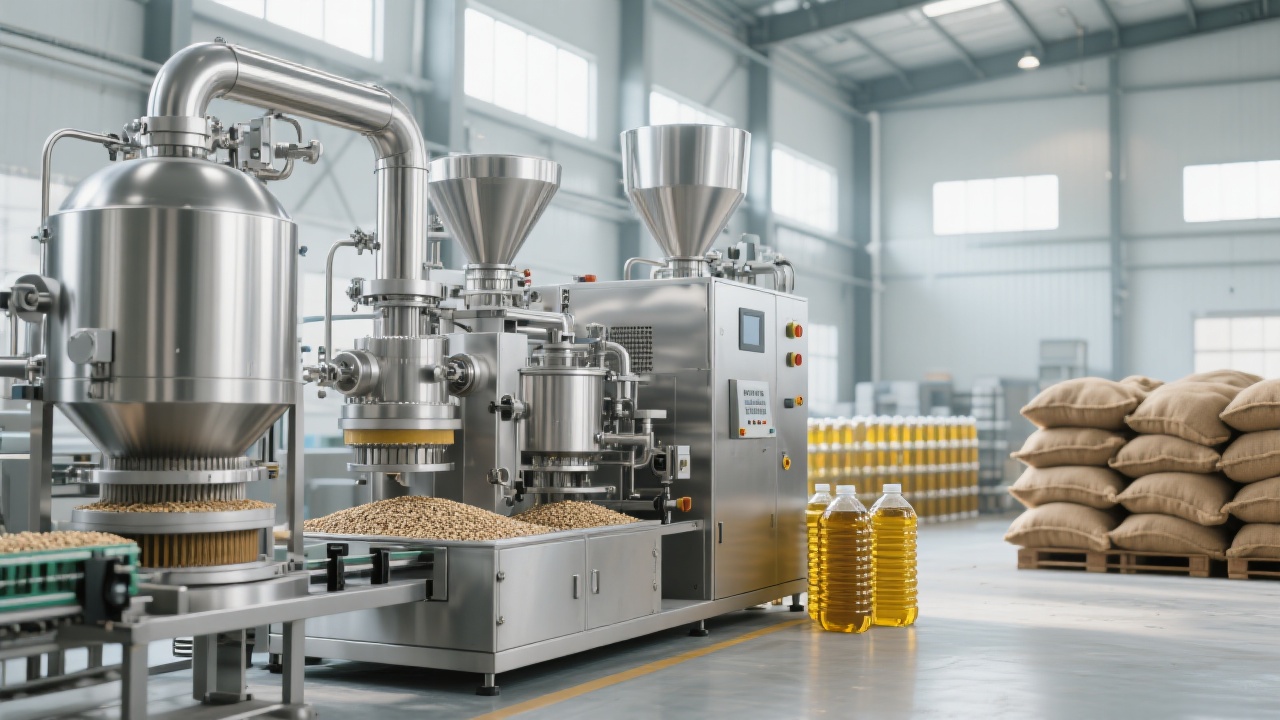
Selection between industrial and small-scale sesame oil extraction equipment depends heavily on production volume, quality requirements, and operational resources. Industrial systems with integrated high-precision temperature control and multi-stage filtration consistently outperform smaller machines in uniformity, yield, and product stability. Nonetheless, smaller setups offer accessibility for niche producers. Awareness of process intricacies and bottlenecks enables all producers to enhance product quality sustainably.





.jpg?x-oss-process=image/resize,m_fill,h_400,w_400/format,webp)