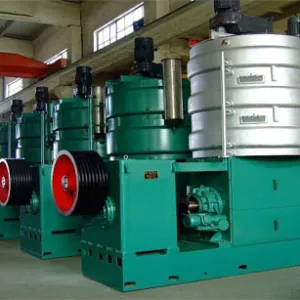
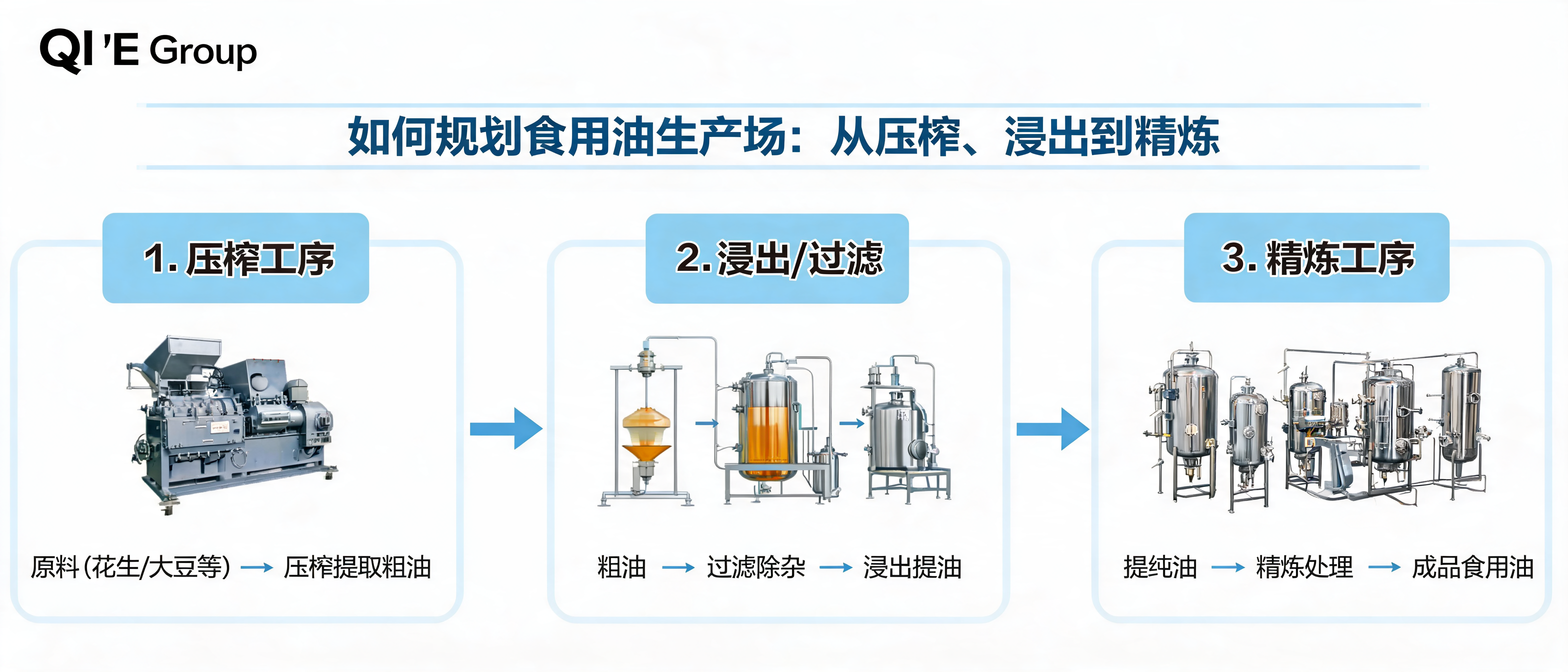
Choosing a sesame cold press machine involves more than comparing purchase prices. The equipment must match your intended oil quality, daily sesame input, operating schedule and available workforce. A useful comparison therefore considers pressing conditions, practical throughput, automation, energy consumption and the scope of the complete installation.
Qi'e Grain and Oil Machinery Co., Ltd. supplies oil pressing and processing equipment, supported by solution design, installation and technical services. For sesame oil workshops and commercial processing plants, equipment selection should begin with a defined production requirement—not an isolated machine price.
A sesame oil milling machine extracts oil from sesame seeds through mechanical pressure. Cold pressing describes the processing conditions, rather than a particular press structure. Both hydraulic and screw press configurations need to be assessed against the temperature conditions required for the intended product.
Low-temperature extraction can help retain sesame oil’s natural flavor and temperature-sensitive components. Hot pressing involves heating the seeds before extraction and can increase oil recovery, but changes the processing conditions and may affect the oil’s characteristics. These approaches should not be treated as interchangeable when specifying a cold-pressed product.
Verify the operating conditions: Ask how seed preparation, pressing friction and extended operation affect temperature. Agree on where temperature will be measured and what operating limits apply. A “cold press” label alone does not establish performance under your production conditions.
Sesame cold press machine performance depends on both the equipment and the raw material. Compare machines using sesame with comparable quality, moisture content and preparation, and use the same measurement basis for each test.
| Evaluation area | What to verify | Why it matters |
|---|---|---|
| Temperature control | Seed and oil temperatures during startup and sustained operation. | Checks whether the process remains within the intended cold-press conditions. |
| Oil recovery | Oil collected relative to seed input, with filtration losses and residual oil in cake considered. | Avoids comparing recovery figures calculated on different bases. |
| Practical throughput | Seed input over a representative run, including loading, discharge, cleaning and stoppages. | Distinguishes nominal capacity from achievable daily production. |
| Energy consumption | Measured electricity use per unit of sesame processed, with the equipment boundary stated. | Supports a more meaningful comparison than motor power alone. |
| Cleaning and maintenance | Access to food-contact areas, cleaning procedures, service intervals and replacement-part requirements. | Helps assess hygiene, downtime and ongoing operating costs. |
Energy comparison: Divide measured electricity consumption in kWh by tonnes of sesame processed. State whether the figure covers only the press or also includes preparation, conveying and filtration equipment.
A hydraulic press uses high pressure to extract oil and can support low-heat processing. Its suitability depends on the specified preparation and operating conditions.
Evaluate the full pressing cycle, including loading, pressure application, unloading and cleaning. Confirm the operator involvement required for the quoted configuration.
A screw press uses a rotating screw to compress sesame seeds, producing oil and press cake. It is a common mechanical extraction approach.
For a cold-press application, verify temperature behavior, feeding stability and cake discharge during sustained operation. Confirm whether the proposed model supports the intended operating schedule.
Neither structure is automatically the better choice. Select the press according to the required oil characteristics, demonstrated performance and fit with the surrounding production process.
Machine capacity varies by model. Specify your target sesame input per day and available operating hours before selecting equipment. The following priorities are planning considerations, not model-specific capacity guarantees.
Automation should be defined by function: Identify which tasks are automated and which still require operators. “Automatic” does not by itself specify staffing levels or establish that the entire sesame oil production line is automated.
A sesame cold press machine price is meaningful only when the model, configuration and supply scope are defined. No model-specific price is provided here; request a quotation based on your processing requirements rather than using a general price as a project budget.
Compare like-for-like quotations. A lower equipment price may reflect a smaller supply scope rather than a lower total investment. Any payback estimate should use verified assumptions for seed cost, saleable oil recovery, operating hours, oil selling price and service costs. Do not assume a guaranteed market for sesame cake or a fixed investment return.
To discuss a suitable sesame cold press configuration with Qi'e, provide:
Explore Qi'e’s cold press oil equipment and discuss your production requirements. A clearly defined specification makes performance checks, configuration decisions and price comparisons more useful.

 483
|
 Qi'e Group grain and oil machinery solutions oil production line equipment edible oil refining equipment engineering design and installation
 140
|
Qi'e Grain and Oil Machinery Co., Ltd. oilseed processing equipment solutions sesame oil pressing machine edible oil refining equipment oil production line design
 121
|
Qi'e sesame oil cold press performance sesame oil equipment selection cold press capacity and oil yield sesame oil machine cost and investment
319
|
Qi'e Grain and Oil Machinery complete grain and oil machinery solutions oil processing production line oil pressing equipment edible oil refining equipment
 175
|
Qi'e Grain and Oil Machinery integrated grain and oil processing solutions oil pressing equipment vegetable oil extraction equipment edible oil refining production line