If you're aiming to produce high - quality sesame oil, the raw materials are the key. Let's start with the basics of identifying high - quality sesame seeds.
You can use simple methods like looking, smelling, and touching. When looking at the sesame seeds, choose those that are plump and uniform in size. A good sesame seed should have a bright, natural color. For example, white sesame seeds should be a pure white, and black sesame seeds should be a deep, shiny black.
Smell is also crucial. High - quality sesame seeds have a mild, nutty aroma. If there is a musty or sour smell, it indicates possible mold or spoilage. When you touch the seeds, they should feel dry and not sticky. Sticky seeds may be affected by moisture, which can lead to mold growth.
Impurities in sesame seeds can significantly affect the quality of the final oil product. You should aim to keep the impurity level below 2%. This can be achieved by using sieves to separate larger impurities like stones and twigs. For smaller impurities, a more precise screening process may be required.
Mold is another major concern. Moldy sesame seeds can produce mycotoxins, which are harmful to health. To control mold risk, ensure proper storage conditions. The storage environment should be dry, with a relative humidity of less than 60%, and the temperature should be kept below 20°C.
Sesame seeds from different regions have distinct characteristics. For instance, Indian sesame seeds are known for their high oil content, usually around 50 - 55%. They are suitable for large - scale oil production due to their high yield. African sesame seeds, on the other hand, often have a stronger flavor, which is ideal for products where a more intense taste is desired, such as in some traditional sauces.
Let's look at a real - life example. A small - scale sesame oil producer once used low - quality sesame seeds with a high impurity level. The resulting oil had a muddy flavor and a short shelf - life. The impurities accelerated the oxidation process, causing the oil to go rancid quickly. This not only led to customer complaints but also a significant loss of business.
There are many misconceptions in sesame oil production. One common one is over - roasting the sesame seeds. High - temperature roasting for too long can destroy the nutrients in the seeds. For example, vitamin E, an important antioxidant in sesame seeds, can be significantly reduced by over - roasting. It's recommended to roast the seeds at a moderate temperature of around 120 - 150°C for 10 - 15 minutes.
Safety and hygiene are non - negotiable in sesame oil production. Always wash your hands before handling the seeds. Use clean equipment and storage containers. Regularly clean and disinfect your production area to prevent the growth of bacteria and other harmful microorganisms.
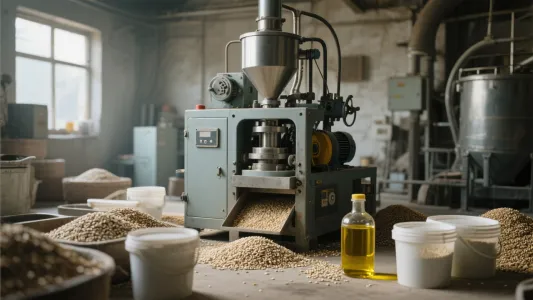
After selecting high - quality sesame seeds, the next step is the oil extraction process. Cold - pressing is a popular method as it can preserve the nutrients and natural flavor of the sesame oil. Additionally, antioxidant treatment can be applied to extend the shelf - life of the oil.
For those interested in producing high - quality sesame oil at home or in small - scale operations, our products can be a great help. Our home - use cold - press machines are designed to extract oil efficiently while maintaining the quality of the oil. Click here to explore our cold - press machines and start your high - quality sesame oil production journey!

 398
|
398
|
 export-grade sesame oil production
sesame oil filtration technology
degumming and deacidification process
edible oil refining techniques
sesame oil processing optimization
export-grade sesame oil production
sesame oil filtration technology
degumming and deacidification process
edible oil refining techniques
sesame oil processing optimization
 396
|
cold pressed sesame oil benefits
vitamin e in sesame oil
unsaturated fats in cooking oil
cold press vs hot press sesame oil
how to make sesame oil at home
396
|
cold pressed sesame oil benefits
vitamin e in sesame oil
unsaturated fats in cooking oil
cold press vs hot press sesame oil
how to make sesame oil at home
 333
|
small sesame oil press machine
cold press sesame oil equipment selection
home sesame oil press usability
cold press vs hot press sesame oil
small scale sesame oil production tips
333
|
small sesame oil press machine
cold press sesame oil equipment selection
home sesame oil press usability
cold press vs hot press sesame oil
small scale sesame oil production tips
 406
|
peanut oil production process
hot-pressed vs cold-pressed peanut oil differences
peanut oil extraction techniques
406
|
peanut oil production process
hot-pressed vs cold-pressed peanut oil differences
peanut oil extraction techniques
 128
|
cold pressed sesame oil
hot pressed sesame oil quality
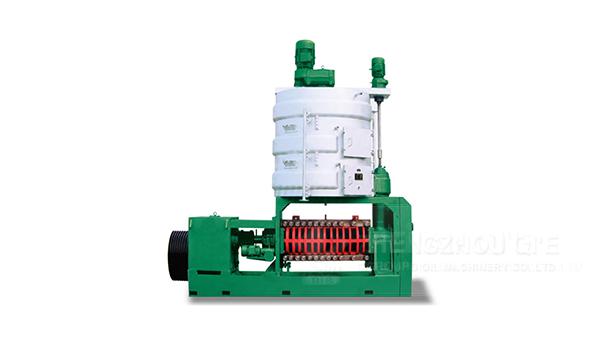
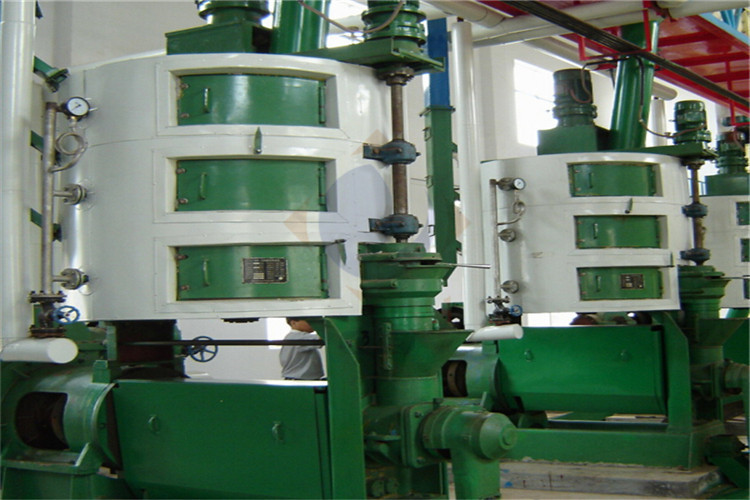
sesame oil extraction equipment
cold pressing vs hot pressing
industrial sesame oil press machines
128
|
cold pressed sesame oil
hot pressed sesame oil quality
sesame oil extraction equipment
cold pressing vs hot pressing
industrial sesame oil press machines







.jpg?x-oss-process=image/resize,m_fill,h_400,w_400/format,webp)