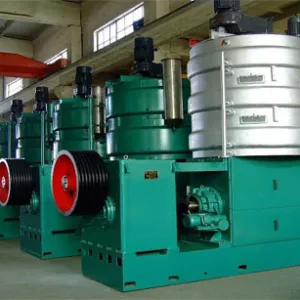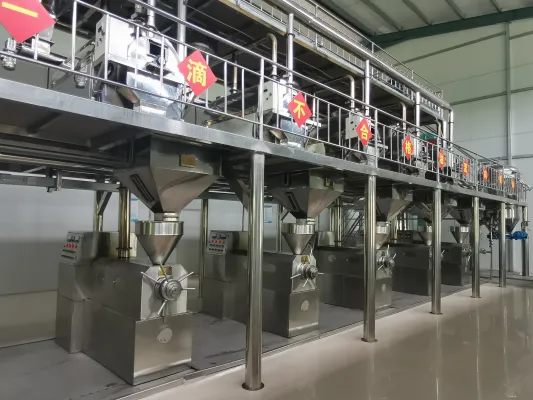
Industrial production of sesame oil has witnessed significant advancements in recent years, with automation control systems emerging as a crucial factor in ensuring the consistency of product flavor, nutrition, and quality. This article delves into the key technical nodes in the entire process from seed cleaning to refining, focusing on precise temperature control and intelligent adjustment mechanisms, and provides practical process optimization solutions for small and medium - sized oil - pressing enterprises through real - world best - practice cases.
The production of sesame oil starts with raw material processing. Seed cleaning is the first step, where impurities such as dust, stones, and other foreign particles are removed. This is crucial as it directly affects the quality of the final product. Pre - pressing and de - hulling also play a vital role. By removing the hulls, the oil yield can be increased by approximately 5 - 10%. A well - designed flowchart can clearly show this overall process, including steps from raw material input to the final refined oil output. (IMAGE-URL1, alt="Sesame oil industrial production process flowchart")
During the high - temperature pressing stage, temperature fluctuations can have a significant impact on the oxidative stability of the oil. Research shows that a temperature deviation of more than 5°C can lead to a 15 - 20% increase in the oxidation rate of sesame oil. Oxidized oil not only has a shorter shelf - life but also loses some of its nutritional value and has an inferior flavor. Therefore, maintaining a stable temperature is essential for producing high - quality sesame oil.
The automation control system plays a central role in each process of sesame oil production. Programmable Logic Controllers (PLCs) are used to manage the entire production line. They can precisely control the operation of various equipment, such as presses and heaters. Sensors are installed at different points in the production line to monitor parameters like temperature, pressure, and flow rate. These sensors can detect even the slightest changes and send signals to the control system for adjustment. Parameter automatic calibration ensures that the production process remains consistent over time. For example, if the temperature in the pressing stage rises unexpectedly, the system can automatically adjust the heating equipment to bring the temperature back to the set value.
Let's take a look at a real - world case. A medium - sized oil - pressing enterprise introduced an automation control system into its sesame oil production line. Before the introduction of the system, the consistency of the finished product was relatively low, with only about 70% of the batches meeting the high - quality standards. After the implementation of the automation system, this percentage increased to over 90%. The production efficiency also improved, with the daily output increasing by 25%. These data clearly demonstrate the effectiveness of the automation control system in enhancing product consistency and production efficiency. (IMAGE-URL2, alt="Data comparison of sesame oil production before and after automation system introduction")
For small and medium - sized enterprises, the selection of equipment is crucial. When choosing an automation control system, they should consider factors such as the scale of production, budget, and future expansion plans. It is recommended that the budget for the automation system should be around 10 - 15% of the total production equipment investment. In addition, proper operation training for employees is essential. Employees should be trained on how to operate the control system, troubleshoot common problems, and conduct regular maintenance. As an expert in the field pointed out in a quote box: "Proper operation and maintenance are the keys to the long - term stable operation of the automation system." (IMAGE-URL3, alt="Proper operation training for automation system")
Maintenance strategies should also be well - planned. Regular inspections and component replacements can prevent system failures. Moreover, enterprises should have a clear future upgrade path. With the continuous development of technology, the automation system can be upgraded to adapt to new production requirements and improve production efficiency further.
If you're a small or medium - sized oil - pressing enterprise looking to enhance the consistency of your sesame oil production, our team of experts can provide you with customized solutions. Don't miss this opportunity to optimize your production process and boost your business. Click here to learn more.