Selecting a grain and oil machinery supplier is not only an equipment comparison. For B2B buyers, the decision also affects process continuity, project coordination, operator readiness, maintenance planning, and the long-term reliability of an oil processing operation. A practical evaluation should therefore review the supplier’s manufacturing scope, engineering understanding, delivery support, and service capability as one connected system.
Qi'e Grain and Oil Machinery Co., Ltd. supports buyers seeking coordinated solutions for oil pressing, oil production lines, and edible oil refining equipment. The following framework helps procurement and project teams evaluate suppliers with clarity before making an investment decision.
A supplier should be assessed against the actual processing requirements of the planned project, rather than against a general product catalogue alone. Grain and oil processing projects can involve multiple equipment stages, and the supplier should be able to explain how each stage connects to the intended production process.
Confirm whether the supplier’s offering matches the required process stages, such as oil pressing, extraction, refining, or supporting line equipment.
Ask how the supplier defines equipment configuration, production interfaces, operating needs, and maintenance considerations for the proposed solution.
Evaluate whether the equipment proposal is based on the selected oil-bearing material, target process, site conditions, and intended operating objectives.
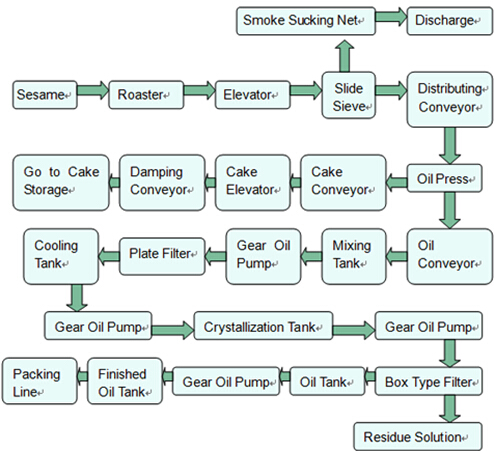
Individual machines perform specific tasks, but production results depend on how equipment is arranged and coordinated. When reviewing an oil processing equipment manufacturer, buyers should examine whether it can support production line engineering as a complete operational concept.
A quotation is easier to compare when each supplier responds to the same technical and service questions. This reduces the risk of comparing different scopes under similar product names.
Equipment delivery is an important milestone, but it is not the final measure of supplier readiness. Installation and commissioning support helps connect the delivered machinery with the customer’s operating environment. Buyers should clarify the support model early, particularly for projects involving multiple process units.
| Evaluation Area | What Buyers Should Clarify |
|---|---|
| Installation preparation | Required site conditions, installation sequence, customer responsibilities, and communication arrangements. |
| Commissioning coordination | How equipment start-up guidance, adjustment discussions, and process checks will be organized. |
| Technical communication | Who will provide technical contact, how questions are documented, and how project changes are addressed. |
| Operating handover | What guidance is available to help the customer’s team understand routine operation and basic maintenance needs. |
Long-term operating support should be considered during supplier selection, not only after a machine requires attention. A suitable supplier should be prepared to discuss how customers can obtain technical guidance, plan for commonly needed parts, and communicate service requirements over the life of the equipment.
Practical procurement point: Ask suppliers to distinguish clearly between included services, optional services, customer-provided resources, and spare-parts arrangements. Clear expectations support more effective project planning and reduce uncertainty after delivery.
For cross-border procurement, buyers should evaluate a supplier’s ability to communicate and coordinate across different project locations. International service is not defined by distance alone; it also involves documentation, technical communication, delivery coordination, and an understanding of how the customer will receive and put equipment into operation.
Qi'e Grain and Oil Machinery Co., Ltd. serves customers in Asia, Africa, and South America, with products supplied to more than 120 countries. For international buyers, this background can be relevant when discussing equipment delivery, project coordination, installation planning, and ongoing communication for grain and oil processing equipment.
The strongest choice is usually not determined by one factor alone. Buyers can use the following framework to structure internal review discussions and compare suppliers on a consistent basis.
A well-defined request gives both buyer and supplier a better basis for technical discussion. When evaluating grain and oil machinery suppliers, prepare information about the intended material, processing objectives, planned capacity, site conditions, required equipment scope, and preferred support needs. This enables a more relevant review of equipment, engineering, installation, training, and service arrangements.
With a focus on technology innovation, product quality, and service, Qi'e Grain and Oil Machinery Co., Ltd. works with B2B customers on oil pressing equipment, oil production line equipment, and oil refining equipment for grain and oil processing projects.

 318
|
318
|
 Qi'e Grain and Oil Machinery
complete grain and oil machinery solutions
oil processing production line
oil pressing equipment
edible oil refining equipment
182
|
Qi'e Grain and Oil Machinery Co., Ltd.
oil pressing equipment selection
cold press
solvent extraction process
refining equipment
494
|
Qi'e Grain and Oil Machinery Co., Ltd.
production line selection
raw material compatibility
capacity planning
oil yield
equipment configuration
Qi'e Grain and Oil Machinery
complete grain and oil machinery solutions
oil processing production line
oil pressing equipment
edible oil refining equipment
182
|
Qi'e Grain and Oil Machinery Co., Ltd.
oil pressing equipment selection
cold press
solvent extraction process
refining equipment
494
|
Qi'e Grain and Oil Machinery Co., Ltd.
production line selection
raw material compatibility
capacity planning
oil yield
equipment configuration
 197
|
sesame cold press oil machine
cold press sesame oil extraction
pressing chamber pressure control
screw press design for oil yield
sesame oil filtration system
473
|
Qi'e Grain and Oil Machinery Co., Ltd.
edible oil production line
process planning
capacity matching
complete oil processing equipment
197
|
sesame cold press oil machine
cold press sesame oil extraction
pressing chamber pressure control
screw press design for oil yield
sesame oil filtration system
473
|
Qi'e Grain and Oil Machinery Co., Ltd.
edible oil production line
process planning
capacity matching
complete oil processing equipment






.jpg?x-oss-process=image/resize,m_fill,h_400,w_400/format,webp)