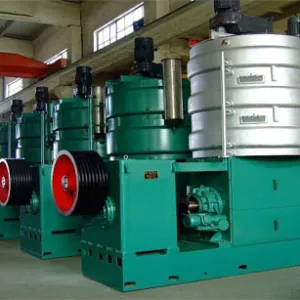
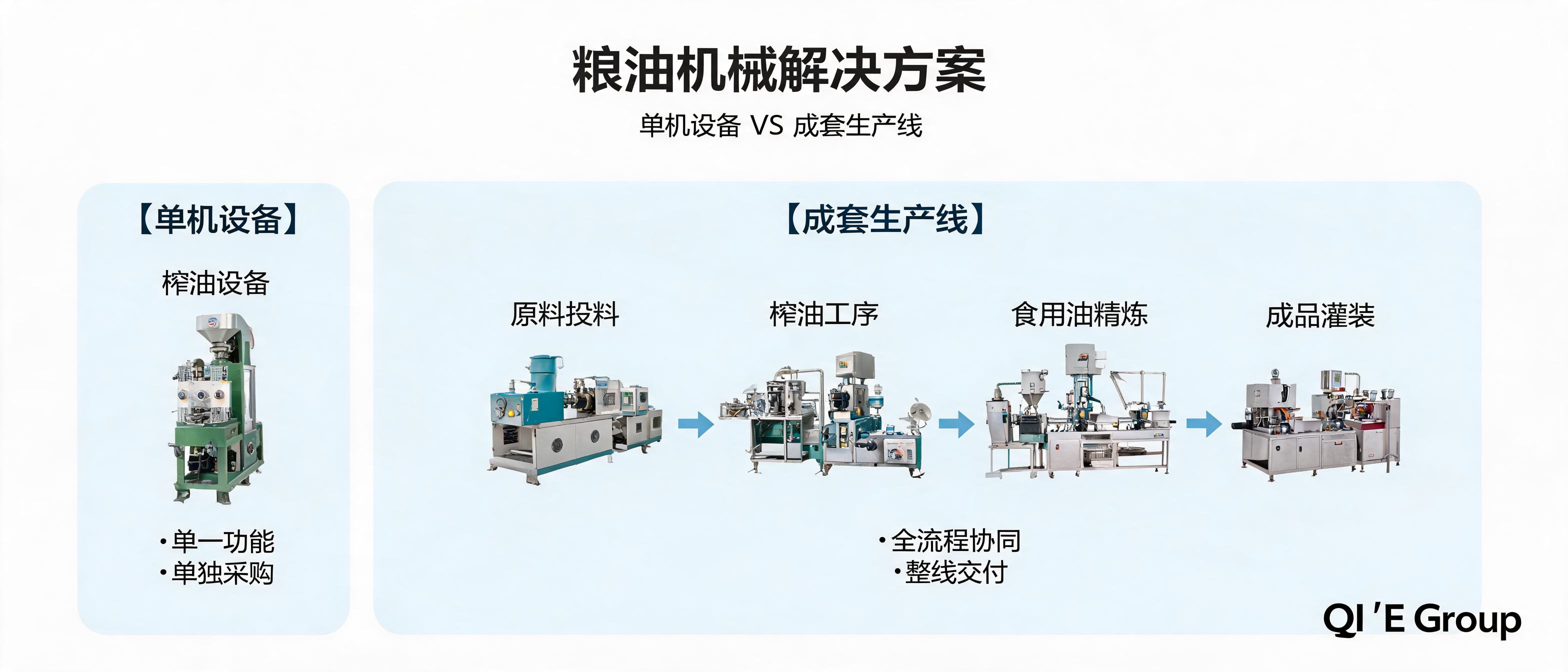
Selecting an edible vegetable oil processing line is a project-planning decision rather than a single-machine purchase. The appropriate configuration depends on the oilseed, desired oil quality, production scale, process route, automation expectations, environmental requirements and long-term service plan. A well-matched line helps processors organize receiving, preparation, oil extraction and refining operations into a practical and maintainable production system.
Qi'e Grain and Oil Machinery Co., Ltd. supports oilseed processors in evaluating equipment for soybean, palm kernel, sunflower seed, sesame and other vegetable oil projects. Its equipment scope includes oil pressing equipment, oil production line equipment and edible oil refining equipment, with planning considerations tailored to the process objectives of each project.
Different oilseeds behave differently during cleaning, conditioning, pressing, extraction and refining. Before selecting equipment, define what will be processed and what oil product the project is designed to produce. This establishes the basis for choosing the process route and the supporting equipment around it.
| Planning factor | Why it matters for line selection |
|---|---|
| Oilseed type | Soybean, palm kernel, sunflower seed and sesame have different preparation and oil-recovery requirements. The line should be designed around the selected feedstock rather than treated as a universal configuration. |
| Raw material condition | Moisture, impurities, particle size and storage condition influence the need for cleaning, drying, dehulling, crushing or conditioning steps. |
| Finished oil target | The target may be pressed oil, cold-pressed oil, crude oil for further processing or refined edible oil. Each objective affects the equipment sequence. |
| By-product utilization | Oil cake, meal and other process outputs should be considered during layout and material-handling planning. |
Oil extraction is the core of an edible vegetable oil processing line. The selected method should reflect raw material characteristics, production capacity, oil quality goals and the overall project plan. Pressing, solvent extraction and combined processing routes serve different operating needs.
Mechanical pressing uses equipment such as screw presses or hydraulic presses to separate oil from prepared oilseeds. It is commonly considered for small and medium production projects and can be configured around cold-press or heated-pressing objectives. For sesame processing, a sesame oil press may use hydraulic pressure or screw pressing, depending on the desired operating method and product requirements.
Solvent extraction equipment is generally evaluated where the project requires a dedicated extraction stage as part of a broader oilseed processing plan. Selection should consider raw material preparation, process safety, recovery arrangements, operating controls and the requirements of the subsequent oil refining process.
For some oilseed projects, pressing and extraction are assessed together rather than as separate investments. A combined approach requires coordinated material flow, intermediate product handling and a clear plan for crude oil and meal processing.
An oil press, extractor or refinery is only one part of the line. Reliable project evaluation considers the equipment before and after the principal processing unit so that capacity and material flow remain aligned across the facility.
Capacity should be evaluated as a line-wide requirement. The rated output of a main oil press does not by itself determine the practical output of the full plant. Preparation, extraction, filtration, refining, tank capacity and material transfer should be planned to work at compatible rates.
The expected oil quality should guide the selection of both extraction and refining equipment. Cold pressing, heated pressing and hydraulic pressing may be evaluated differently when flavor, aroma and low-temperature processing are important considerations. For example, low-temperature sesame oil processing may be considered when the project prioritizes preservation of the oil's natural sensory characteristics.
Where the objective is refined edible oil, the refining line should be planned around the crude oil properties and the required finished-oil specification. Equipment selection should therefore consider the full vegetable oil refining process, including the practical connection between crude oil production, treatment, storage and finished-oil handling.
Automation should be selected according to the operating model, workforce plan and desired level of process control. Semi-automatic and automatic configurations can be considered for material feeding, pressing, transfer and other production steps. The right level is the one that supports consistent operation without creating unnecessary complexity for the facility.
| Evaluation area | Questions to consider |
|---|---|
| Automation level | Which process steps require operator involvement, and which should be controlled automatically? |
| Cleaning access | Can the equipment be cleaned effectively to support orderly food-production practices? |
| Maintenance | Are routine inspection, replacement and servicing points accessible within the plant layout? |
| Energy and environmental planning | How will the project address energy use, material recovery, wastewater, ventilation and other site-specific requirements? |
A processing line should fit the building, utility conditions and operating workflow. Prior to final equipment selection, document the available floor area, building height, access routes, power supply, water conditions, storage space and intended material movement. This information supports more practical equipment arrangement and installation planning.
Project planning principle: the best edible vegetable oil processing line is not defined by one machine alone. It is a coordinated system in which raw material preparation, oil extraction, refining, handling and service support are aligned with the processor's real operating needs.
Technical communication should cover the proposed process route, equipment scope, installation conditions, operator training needs, maintenance expectations and future support arrangements. Qi'e Grain and Oil Machinery approaches these discussions as part of a complete oilseed processing solution, from oil pressing and extraction equipment through edible oil refining equipment and related technical service.

 377
|
 Qi'e Grain and Oil Machinery Co., Ltd. overseas grain and oil processing projects equipment delivery and installation commissioning and technical service grain and oil processing
 246
|
Qi'e Grain and Oil Machinery Co., Ltd. grain and oil machinery turnkey solution oil pressing production line edible oil refining
 143
|
industrial sesame oil press continuous sesame oil pressing system capacity matching analysis food processing equipment selection sesame oil production line
 322
|
Qi'e Grain and Oil Machinery Co., Ltd. grain and oil machinery equipment oil pressing machinery edible oil refining oilseed processing
127
|
Qi'e Grain and Oil Machinery grain and oil machinery industry high-efficiency and eco-friendly automation equipment upgrade