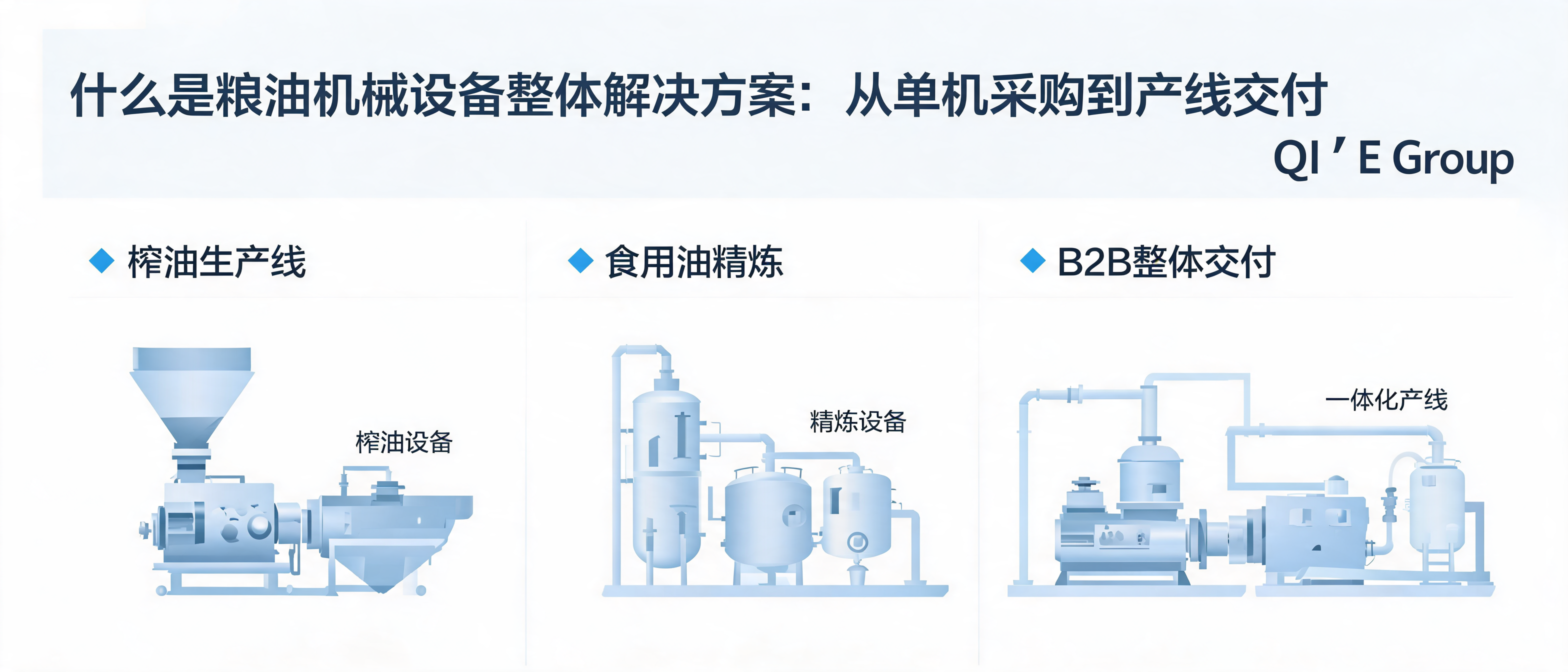
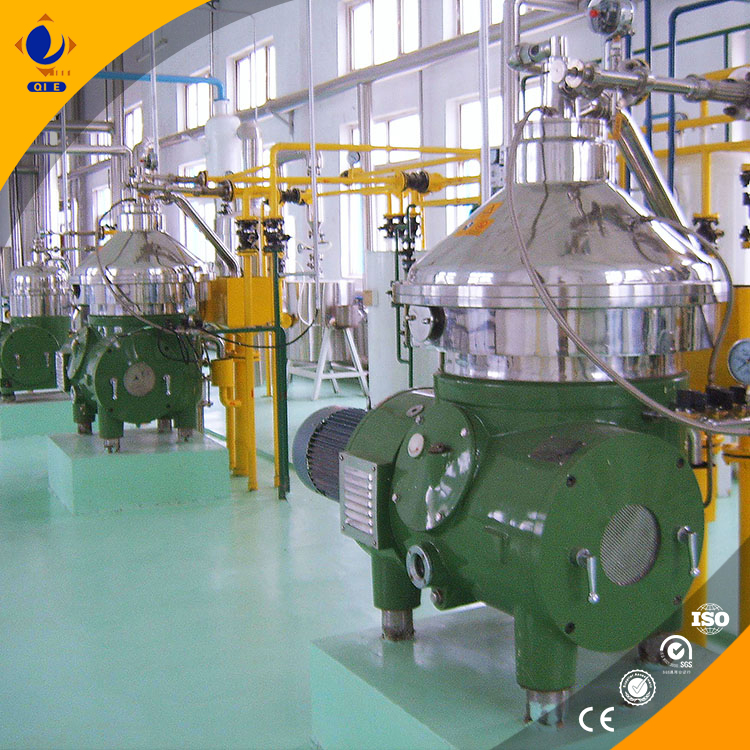
Planning an edible oil production line begins with a clear understanding of the raw material, intended processing route, production scale, and finished-oil requirements. A well-matched line connects oilseed preparation, oil pressing or solvent extraction, crude oil handling, and refining into a practical processing system.
For investors and processors, the objective is not simply to select individual machines. It is to define a coordinated equipment configuration that suits the selected oilseed, site conditions, operating needs, and future service requirements. Qi'e Grain and Oil Machinery Co., Ltd. supports this structured planning process with equipment and technical service for oil pressing, oil production lines, and edible oil refining.
An edible oil production line should be planned around the product and process objectives before equipment is configured. The same type of machinery is not necessarily suitable for every oilseed, capacity target, or finished-oil specification. Early decisions provide the basis for selecting the appropriate preparation, extraction, refining, and auxiliary equipment.
Identify the oilseed or oil-bearing material to be processed, such as soybean, palm kernel, sunflower seed, or another suitable feedstock.
Define the expected throughput and operating schedule so that the main equipment and supporting systems can be sized consistently.
Clarify whether the project will supply crude oil, refined edible oil, or both, as this determines the required downstream treatment.
Oilseed characteristics influence the configuration of the complete edible oil production line. Material condition, handling requirements, and the selected processing method should be considered together. Preparation equipment is arranged to support stable feeding and suitable conditions for the next stage of processing.
| Planning Item | Why It Matters | Equipment Planning Consideration |
|---|---|---|
| Oilseed type | Different materials have different processing characteristics. | Select a process route and equipment arrangement compatible with the intended feedstock. |
| Material condition | Incoming material affects preparation and process continuity. | Plan receiving, cleaning, preparation, and conveying functions as needed. |
| Production objective | The target product determines the level of downstream treatment. | Coordinate extraction equipment with crude oil handling and refining equipment where required. |
Oil pressing and solvent extraction are two important processing approaches in edible oil production. The appropriate choice depends on the raw material, planned scale, product requirements, and overall process design. In some projects, these methods may be evaluated as part of a broader oil production line configuration.
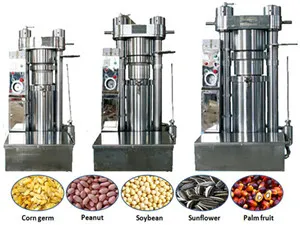
An oil pressing route is planned around the preparation of oil-bearing material and mechanical oil extraction. It may be considered for projects requiring a pressing-focused production process.
A solvent extraction route is planned as a dedicated extraction process and should be assessed together with material preparation, extraction operations, crude oil handling, and site-specific requirements.
The production line does not end when oil is obtained from pressing or extraction. The intended use of crude oil should be defined early, because it affects the need for refining equipment and the connection between process stages. Where refined edible oil is part of the project scope, refining should be considered as an integrated part of the line rather than an isolated addition.
Planning principle: specify the expected finished-oil condition first, then evaluate the crude oil treatment and edible oil refining equipment needed to support that objective. This helps keep upstream extraction and downstream refining decisions aligned.
Equipment selection should reflect the actual conditions of the planned facility. A practical edible oil production line layout accounts for the movement of raw materials, intermediate products, oil, and supporting utilities throughout the plant. Reviewing these factors before finalizing the configuration can help create a more organized implementation plan.
A complete configuration is built by linking each decision to the next: oilseed selection informs preparation; preparation supports pressing or extraction; crude oil handling connects to refining; and plant conditions guide the final layout and service plan. This approach provides a clearer basis for evaluating oilseed processing equipment as a complete system.
Qi'e Grain and Oil Machinery Co., Ltd. provides equipment for oil pressing, oil production lines, and edible oil refining, together with design, installation, and technical service support. By sharing the planned raw material, target capacity, preferred process route, refining scope, and site information, processors can develop a more relevant equipment selection plan for their edible oil project.

 340
|
340
|
 solvent extraction sesame oil equipment maintenance
reduce solvent residue in oil extraction
desolventizing temperature control
solvent circulation optimization
industrial oil extraction troubleshooting
solvent extraction sesame oil equipment maintenance
reduce solvent residue in oil extraction
desolventizing temperature control
solvent circulation optimization
industrial oil extraction troubleshooting
 101
|
low temperature sesame oil press
cold press sesame oil equipment
sesame oil production solution
sesame oil press selection guide
Qie Group
101
|
low temperature sesame oil press
cold press sesame oil equipment
sesame oil production solution
sesame oil press selection guide
Qie Group
 264
|
cold-pressed sesame oil process
cold press sesame oil benefits
sesame oil export advantages
low-temperature pressing technology
sesame oil nutrition retention
264
|
cold-pressed sesame oil process
cold press sesame oil benefits
sesame oil export advantages
low-temperature pressing technology
sesame oil nutrition retention
 133
|
high-efficiency cold press sesame oil extractor
cold press technology
sesame oil cold extraction
oil nutrition preservation
small business oil press machine
133
|
high-efficiency cold press sesame oil extractor
cold press technology
sesame oil cold extraction
oil nutrition preservation
small business oil press machine
 376
|
Qi'e Grain and Oil Machinery Co., Ltd.
overseas grain and oil processing projects
equipment delivery and installation
commissioning and technical service
grain and oil processing
376
|
Qi'e Grain and Oil Machinery Co., Ltd.
overseas grain and oil processing projects
equipment delivery and installation
commissioning and technical service
grain and oil processing






.jpg?x-oss-process=image/resize,m_fill,h_300,w_300/format,webp)

.jpg?x-oss-process=image/resize,m_fill,h_400,w_400/format,webp)