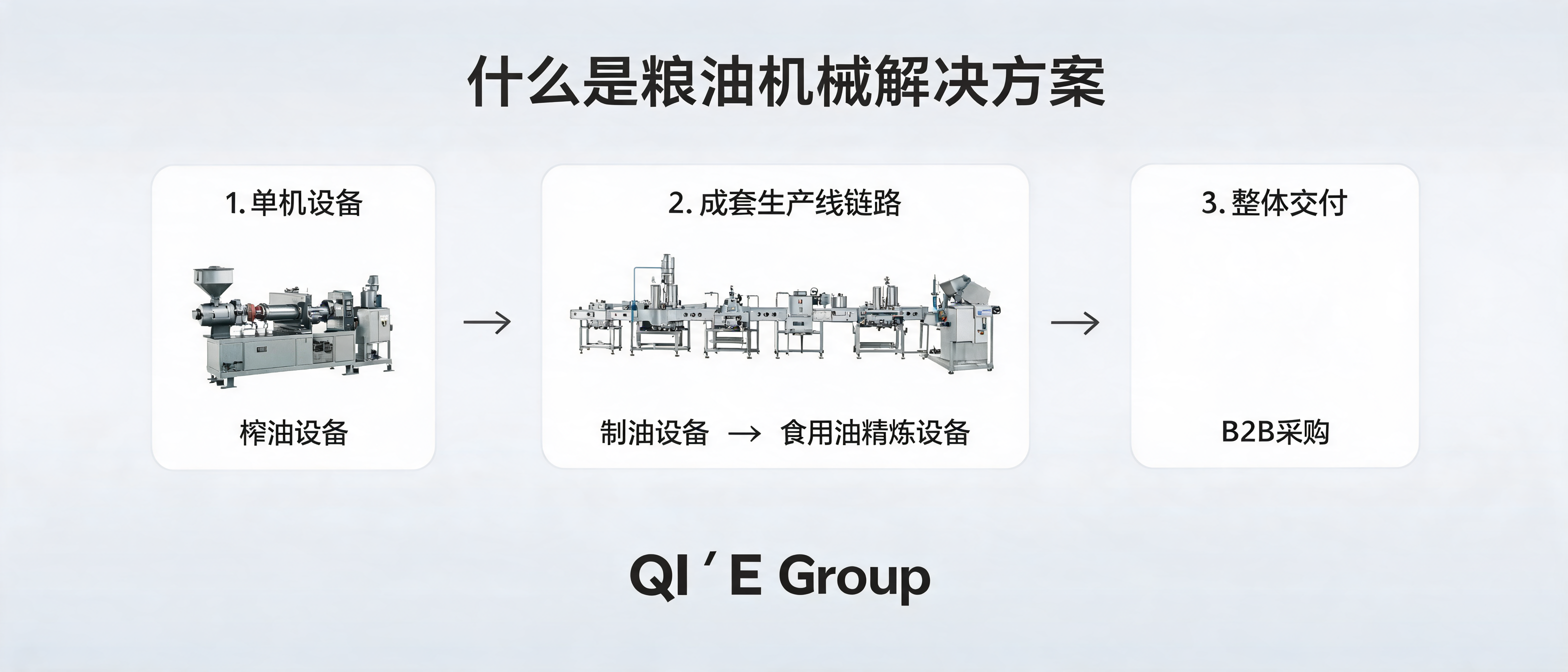
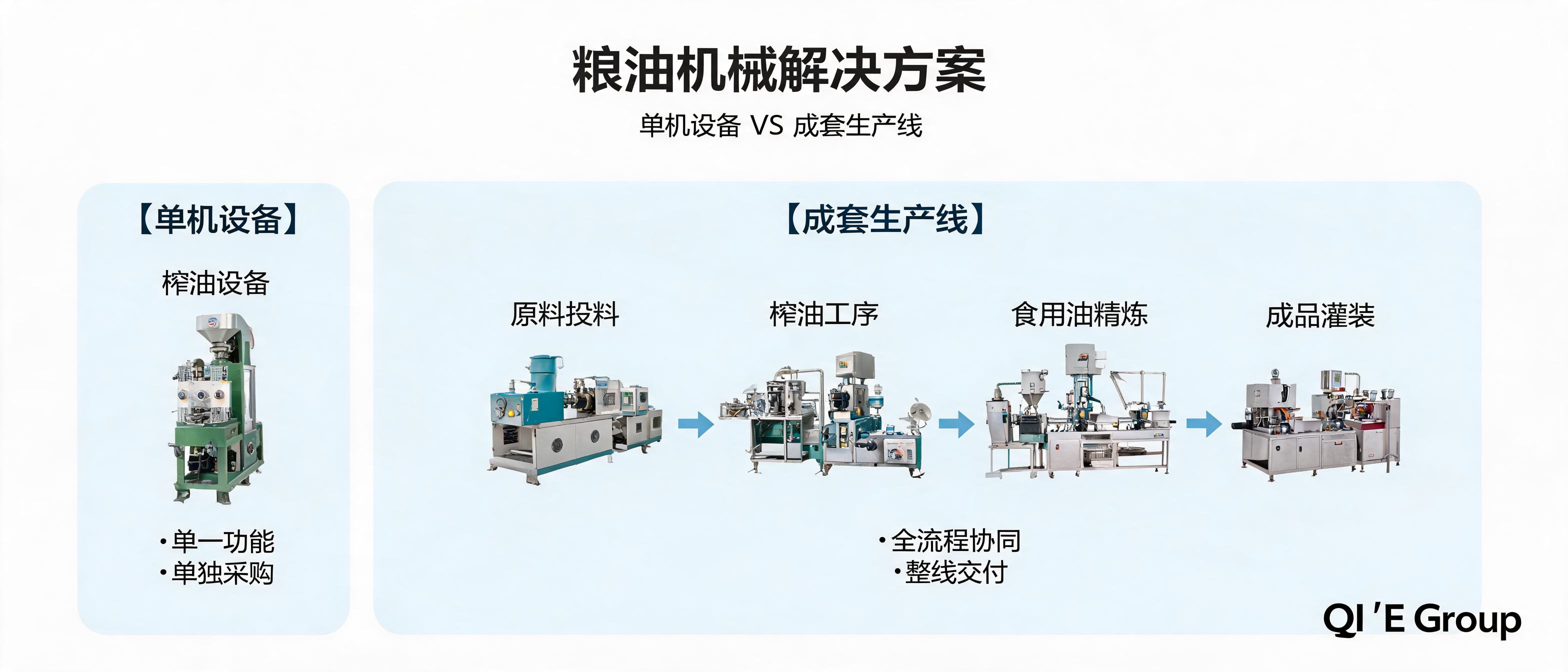
Selecting edible oil production line equipment begins with a clear understanding of the oilseed, intended product quality, processing capacity, and operating conditions. For sesame processing projects, the equipment configuration should support reliable seed preparation, oil pressing or extraction, oil handling, and—where required—edible oil refining.
As a manufacturer of oil pressing equipment, oil production line equipment, and oil refining equipment, Qi'e Grain and Oil Machinery Co., Ltd. helps B2B processors evaluate practical equipment combinations for sesame and other vegetable oils. The right solution is not simply the largest machine; it is a coordinated production line matched to the project’s raw material, processing method, automation target, and long-term service needs.
Edible oil production line equipment can include seed cleaning and preparation systems, oil pressing equipment, solvent extraction equipment, crude oil filtration, refining sections, storage, and auxiliary conveying or control systems. Not every project requires every stage. The most suitable arrangement depends on what the processor plans to produce and how the finished oil will be positioned.
Confirm the oilseed type, incoming condition, moisture, impurity level, and expected handling requirements. Sesame requires a process that considers its small seed size and desired aroma profile.
Define whether the objective is aromatic pressed oil, cold-pressed oil, crude oil for further treatment, or refined edible oil. This decision affects the press, temperature control, filtration, and refining scope.
Capacity should be selected around actual supply, operating hours, staffing, utilities, and growth plans—not only a theoretical daily throughput figure.
A sesame oil grinding machine is commonly understood as equipment used to mechanically process sesame for oil recovery. In an industrial oil mill, the pressing method and upstream preparation have a direct influence on operating continuity, oil characteristics, and the handling of sesame cake.
| Processing Method | Operating Principle | Selection Considerations |
|---|---|---|
| Cold pressing | Oil is extracted under relatively low-temperature conditions. | Suitable when preserving the natural flavor and nutritional characteristics of sesame oil is a primary requirement. |
| Hot pressing | Sesame is heated before extraction. | Can be considered where process conditions and production goals favor higher oil recovery; temperature management remains important. |
| Hydraulic pressing | High pressure is applied to express oil with limited heat generation. | Often evaluated for applications emphasizing oil aroma and product quality characteristics. |
| Screw pressing | A rotating screw continuously compresses prepared seeds and discharges oil and cake. | A widely used option for continuous production lines; selection should consider feed preparation, desired automation, and cake discharge requirements. |
A complete edible oil production line should be assessed as a connected process rather than as separate machines. The following modules can be included according to the selected process route:
Sesame oil machines are available in different sizes, from smaller units for limited-scale processing to industrial systems designed for larger daily throughput. Capacity labels should be reviewed alongside material availability, production shifts, plant layout, power supply, operator capability, and cleaning schedules.
Practical selection principle: choose a line that can be operated consistently with the available raw material and site resources. Oversized equipment may create avoidable idle capacity, while undersized equipment can limit throughput and disrupt production planning.
Automation may be semi-automatic or more fully automated depending on the project. A higher level of automation can reduce repetitive manual tasks and support process consistency, but it should be evaluated together with maintenance capability, operator training, and the complexity appropriate for the facility.
For food processing operations, equipment selection should include practical attention to material flow, cleaning access, routine inspection, and prevention of unnecessary contamination. Sesame oil extraction equipment that is accessible for cleaning and maintenance supports more orderly production management.
Equipment performance depends on how the full project is designed, installed, operated, and maintained. Before finalizing an edible oil production line, processors should prepare a clear project brief covering the following points:
Qi'e Grain and Oil Machinery Co., Ltd. develops and supplies equipment for oil pressing, vegetable oil processing, and edible oil refining projects. For a sesame oil production project, a meaningful technical discussion should begin with the raw material, desired process route, capacity, automation expectations, and site conditions. This approach helps identify equipment that fits the actual production objective while supporting installation planning, technical service, and future maintenance.

 480
|
 Qi'e Grain and Oil Machinery Co., Ltd. edible oil refining equipment project implementation installation and commissioning technical service
 246
|
Qi'e Grain and Oil Machinery Co., Ltd. grain and oil machinery turnkey solution oil pressing production line edible oil refining
433
|
Qi'e Grain and Oil Machinery Co., Ltd. grain and oil processing machinery oil pressing equipment oil production line edible oil refining equipment
 483
|
Qi'e Group grain and oil machinery solutions oil production line equipment edible oil refining equipment engineering design and installation
 48
|
solvent extraction sesame oil equipment maintenance desolventizing temperature control solvent circulation optimization industrial oil press troubleshooting oil quality stability