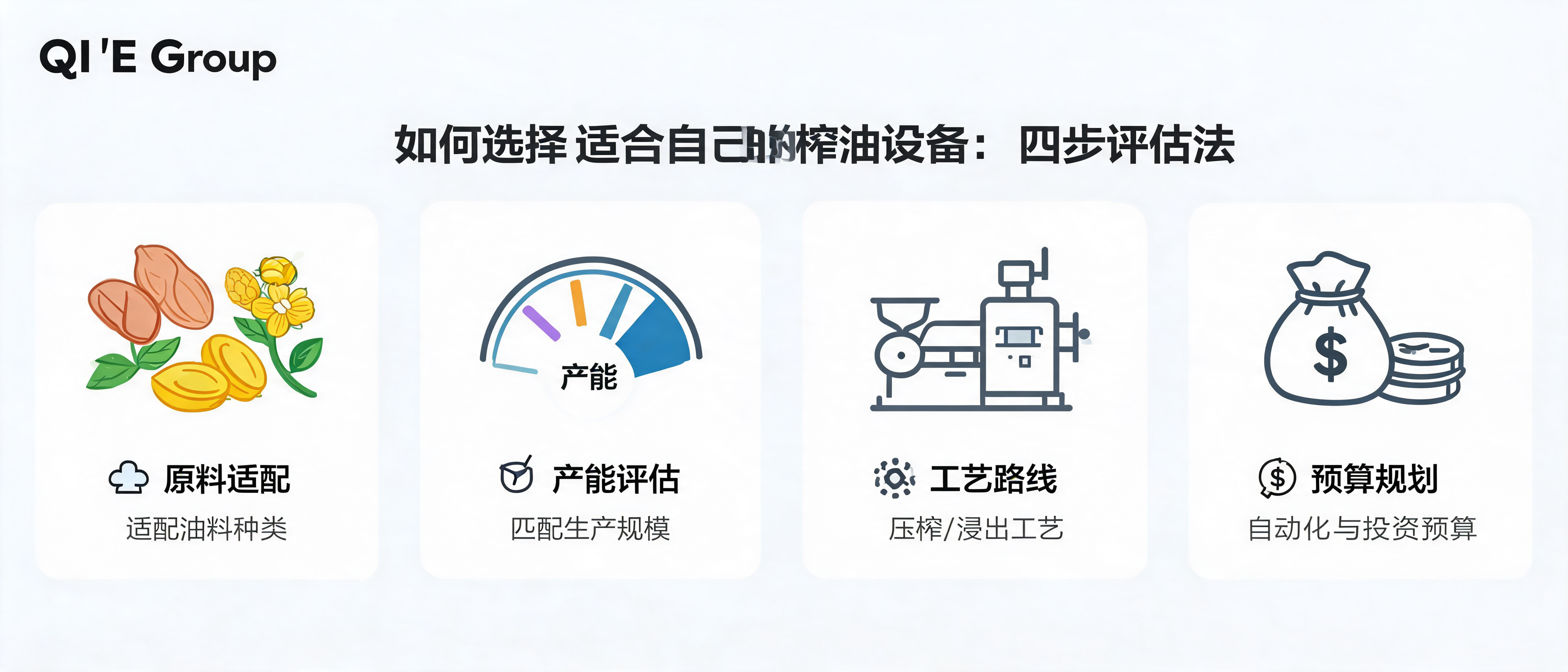
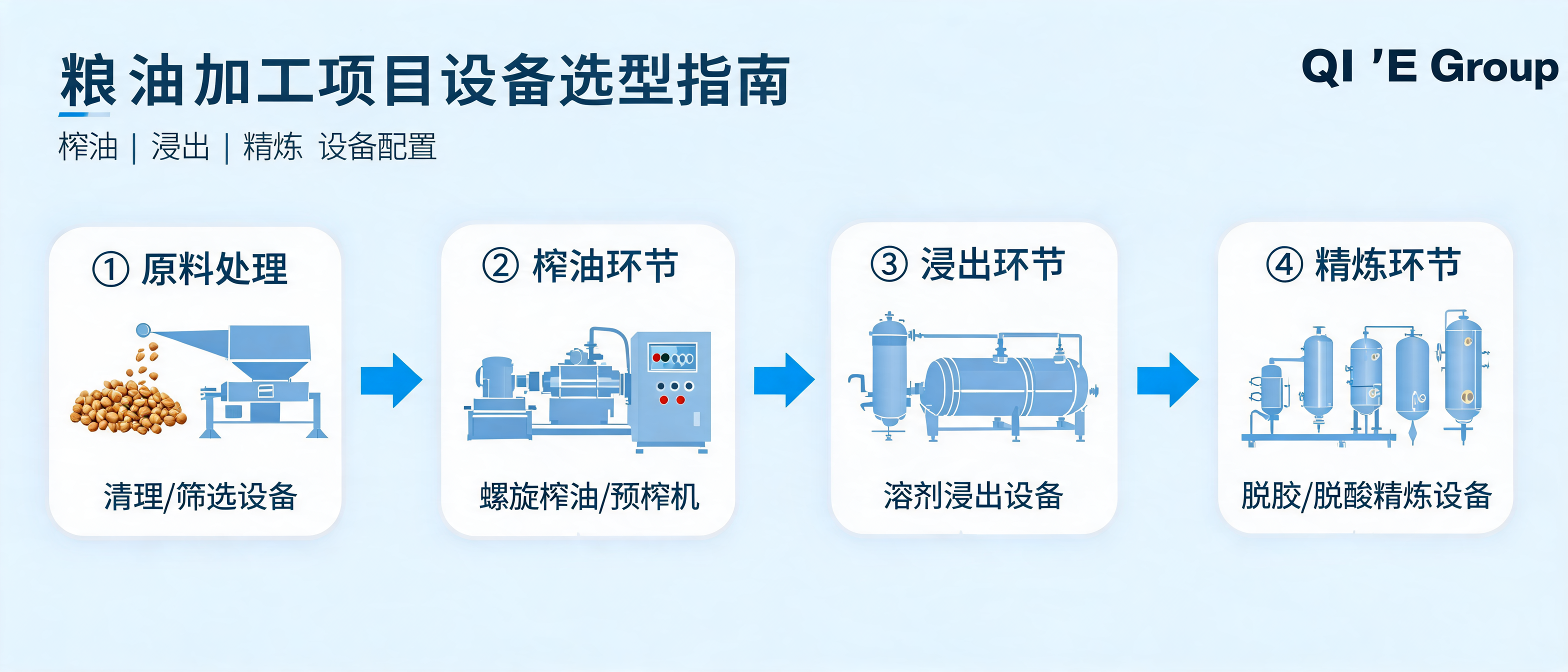
Selecting edible oil processing line equipment begins with a clear understanding of the oilseed, the intended production scale, and the required oil quality. Whether a project is focused on sesame, soybean, palm kernel, sunflower seed, or another oil-bearing raw material, the equipment configuration should support a stable and practical processing route—from seed preparation and oil pressing to extraction, filtration, and refining where required.
Qi'e Grain and Oil Machinery Co., Ltd. helps oil processors evaluate these decisions as connected parts of one production system. A suitable line is not simply the highest-output machine; it is a configuration matched to raw material characteristics, capacity targets, operating conditions, automation needs, and long-term service requirements.
Oilseed composition, moisture condition, shell content, oil content, and desired product profile all influence equipment selection. The same production objective may require different preparation and pressing conditions for different materials. For example, sesame oil processing commonly considers whether the producer prefers a lower-temperature pressing approach for aroma and natural characteristics, or a heated pressing process designed to support oil yield.
| Selection Factor | What to Evaluate | Equipment Impact |
|---|---|---|
| Oilseed type | Seed size, hardness, shell level, moisture, oil content, and preparation requirements. | Determines the need for cleaning, dehulling, crushing, flaking, cooking, drying, or other pretreatment equipment. |
| Production capacity | Planned daily throughput, operating hours, future expansion, and material supply stability. | Guides press size, conveying capacity, storage arrangement, and the scale of auxiliary systems. |
| Processing method | Cold pressing, hot pressing, hydraulic pressing, screw pressing, solvent extraction, or combined processing. | Defines the core oil press equipment and the preparation, recovery, and control systems around it. |
| Oil quality target | Crude oil use, filtered oil, refined edible oil, flavor retention, and downstream packaging requirements. | Clarifies whether filtration, degumming, neutralization, bleaching, deodorization, or other refining stages are needed. |
| Automation level | Operator availability, batch consistency needs, monitoring requirements, and production management practices. | Affects feeding, conveying, temperature control, pressing operation, filtration, and control system configuration. |
| Site and service conditions | Available space, utilities, local regulations, installation conditions, maintenance access, and technical support needs. | Influences layout planning, equipment interfaces, utility design, installation work, and long-term operability. |
Edible oil processing technology should be selected according to both the raw material and the business objective. The appropriate route may be a compact pressing solution for a smaller operation, a continuous production line for higher throughput, or a more integrated system combining pressing, extraction, and refining.
Mechanical pressing uses pressure to separate oil from prepared seeds. Screw presses are widely used for continuous oil extraction, while hydraulic presses can be considered where lower heat generation and product aroma are important. For sesame oil, the choice between cold pressing, hot pressing, hydraulic pressing, and screw pressing should reflect the desired balance between processing conditions, oil quality characteristics, and operating efficiency.
Solvent extraction is generally evaluated for projects requiring a dedicated extraction stage or further recovery of oil from suitable materials. This route requires careful engineering of extraction, solvent recovery, safety controls, environmental management, and downstream crude oil handling. It should be planned as an integrated system rather than as an isolated machine purchase.
Refining equipment is selected when the production plan requires removal or reduction of particular impurities and improved suitability for the intended edible oil market. The refining scope should correspond to the crude oil condition, required finished-oil specification, capacity, and applicable processing requirements. A well-matched refining section must also work smoothly with upstream pressing or extraction equipment.
A sesame oil grinding machine or sesame oil press is intended to extract oil from sesame through mechanical or hydraulic pressing methods. In practical project planning, “grinding machine” may refer broadly to sesame oil processing equipment, but the actual configuration should distinguish between seed preparation, pressing, oil clarification, and optional refining steps.
Reliable edible oil processing depends on how each stage connects with the next. Raw material receiving and cleaning affect pressing stability. Pretreatment affects extraction conditions. Pressing or extraction affects crude oil quality. Filtration and refining requirements affect the final product route. Planning these interfaces early can help avoid capacity mismatches and unnecessary operational complexity.
Before finalizing an edible oil processing line, project teams should prepare clear information for technical evaluation:
Qi'e Grain and Oil Machinery Co., Ltd. supplies oil pressing equipment, oil production line equipment, and edible oil refining equipment for B2B processing projects. By aligning equipment selection with the oilseed, processing technology, capacity, automation requirements, and service plan, processors can establish a more coherent foundation for installation, operation, and future development.

 143
|
 industrial sesame oil press continuous sesame oil pressing system capacity matching analysis food processing equipment selection sesame oil production line
 43
|
Qi'e Grain and Oil Machinery Co., Ltd. grain and oil machinery equipment oil pressing equipment edible oil production line vegetable oil extraction and refining equipment
359
|
Qi'e Grain and Oil Machinery Co., Ltd. integrated grain and oil processing solutions oil pressing equipment edible oil production line edible oil refining equipment
38
|
Qi'e Grain and Oil Machinery Co., Ltd. grain and oil machinery supplier oil processing equipment manufacturer production line engineering services equipment installation and commissioning
 410
|
Qi'e Grain and Oil Machinery Co., Ltd. integrated oil processing equipment sesame oil press machine edible oil refining equipment oil extraction equipment