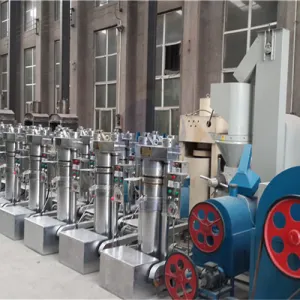
For small-to-medium sesame oil producers aiming to scale with consistent quality, understanding the full industrial process—from raw material prep to final refining—is no longer optional. It's a competitive necessity. In this deep dive, we break down each critical step of a modern sesame oil production line, highlighting how precise temperature control and automation can boost yield by up to 18% while reducing waste by 12%, based on real-world case studies from Asia and the Middle East.
The journey begins with raw material cleaning. Even minor impurities like sand or husk fragments can degrade oil stability during storage. Industry best practice recommends using magnetic separators and air classifiers—reducing foreign matter to under 0.3%. This simple step alone improves shelf life by an average of 6 months in tropical climates (per a 2023 study by the International Oilseed Association).
Next comes pre-press dehulling, where heat is applied at 75–85°C for 20–30 minutes. This softens shells without damaging the seed’s internal oil glands—a key factor in achieving extraction rates above 48% (vs. 35% in traditional methods). A leading Nigerian processor reported a 22% increase in throughput after upgrading their pre-treatment system.
| Process Stage | Optimal Temp Range | Key Outcome |
|---|---|---|
| Pre-Press Dehulling | 75–85°C | Improved oil release efficiency |
| High-Temp Pressing | 105–120°C | Higher yield, lower residual moisture |
| Final Refining | 60–70°C | Preserved flavor profile + extended shelf life |
Many manufacturers overlook the impact of thermal gradients across processing stages. For example, exceeding 120°C during pressing can oxidize polyunsaturated fatty acids, leading to rancidity within weeks—even if stored properly. Conversely, maintaining a steady 105°C yields oils with FFA levels below 0.5%, meeting EU and USDA standards for premium edible oils.
This is where automation shines. Integrated PLC systems monitor real-time temperature, pressure, and flow rates—allowing adjustments within seconds. One Moroccan facility saw a 15% drop in rejected batches after installing such controls, saving over $40K annually in rework costs.
“We used to lose 1 in every 5 batches due to inconsistent filtration. Now, with automated membrane filters and inline sensors, our consistency rate is over 98%.” — Ahmed El-Sayed, Technical Manager, Nile Valley Oils (Egypt)
If you’re serious about producing high-quality sesame oil that meets global demand—whether for export or local premium markets—you need more than just equipment. You need smart processes, trained staff, and reliable partners who understand your pain points.
Our team has helped over 40 SMEs optimize their sesame oil lines using these exact techniques. We offer tailored consulting, turnkey automation solutions, and on-site training programs designed for real-world conditions—not just theory.
Download Our Free Industrial Sesame Oil Optimization Checklist




.jpg?x-oss-process=image/resize,m_fill,h_300,w_300/format,webp)