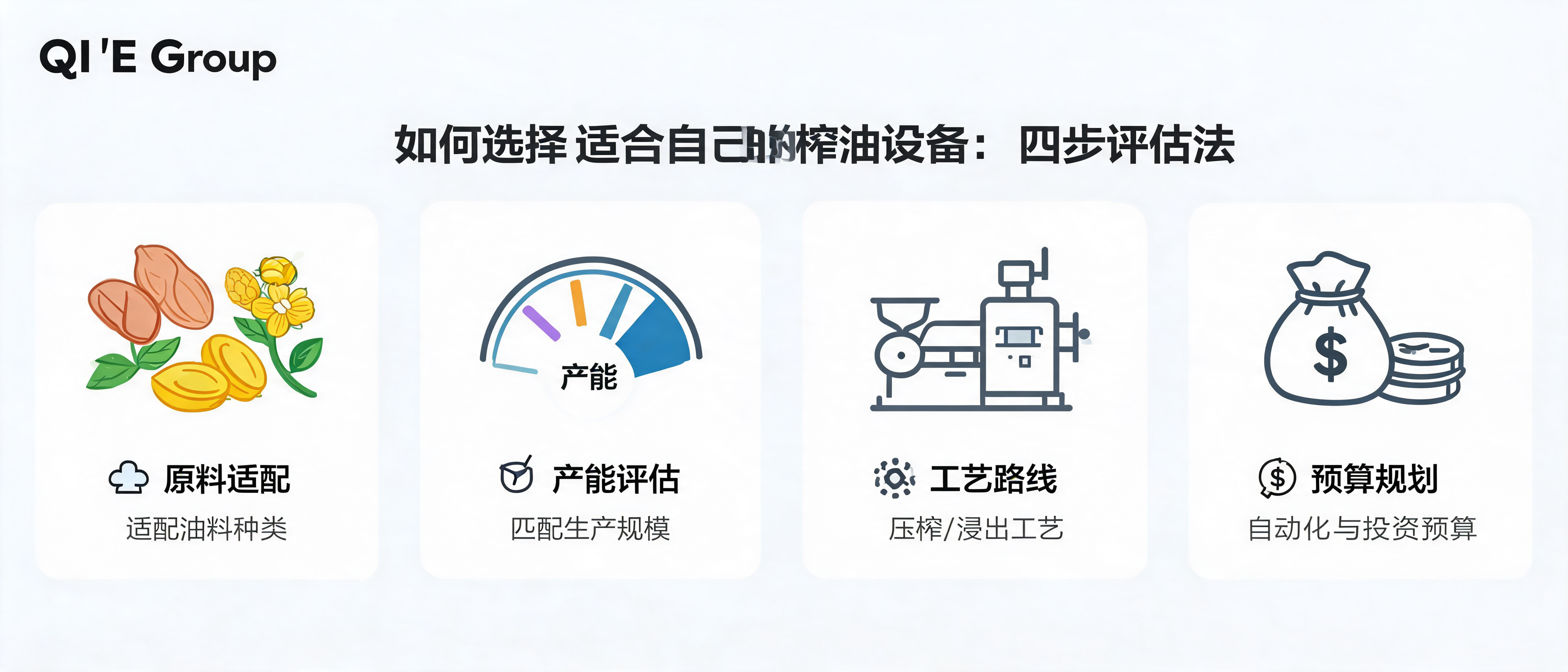
Selecting sesame oil processing equipment starts with a clear production plan. The suitable configuration depends on the condition of the sesame seed, planned daily throughput, preferred extraction method, required oil profile, level of automation, and whether refining is included in the project scope.
Qi'e Grain and Oil Machinery Co., Ltd. supports B2B processors with equipment selection for sesame oil pressing and integrated processing lines. A well-matched solution helps align the pressing process with practical operating requirements rather than choosing equipment by price or nominal capacity alone.
Sesame varieties, seed cleanliness, moisture condition, storage practice, and the intended oil market all affect equipment selection. Before specifying a sesame oil press machine or a complete sesame oil production line, processors should define how the seed will be prepared and what characteristics the finished oil should retain.
Evaluate seed quality, impurities, moisture, and the need for cleaning, drying, dehulling, or conditioning before pressing. Consistent feed preparation supports steadier operation and more predictable oil separation.
Determine whether the priority is a natural aroma and low-temperature process, a higher extraction-oriented process, or a downstream refined edible oil specification. This decision influences the press type and supporting equipment.
Pressing produces sesame cake in addition to oil. Planning for collection, handling, and the intended use of this material should be considered when designing the production flow.
Different sesame oil extraction methods serve different operational and product objectives. The right choice should be based on the processor’s process design, not on a universal assumption that one technology is best for every project.
| Pressing Method | Process Consideration | Typical Selection Focus |
|---|---|---|
| Cold pressing | Uses lower-temperature processing conditions to help preserve the natural flavor, aroma, and nutritional characteristics of sesame oil. | Suitable when the product plan emphasizes a natural sensory profile and controlled processing temperature. |
| Hot pressing | Includes heating or conditioning before extraction and may support an extraction-focused operating approach. | Suitable where the process plan accepts thermal treatment as part of production. |
| Hydraulic pressing | Applies pressure for oil extraction with limited heat generation during the pressing stage. | Often considered for processors focused on oil aroma and quality-oriented production. |
| Screw pressing | Uses a rotating screw to continuously press sesame seed and separate oil from press cake. | A practical option for continuous operation and a broad range of small to industrial processing applications. |
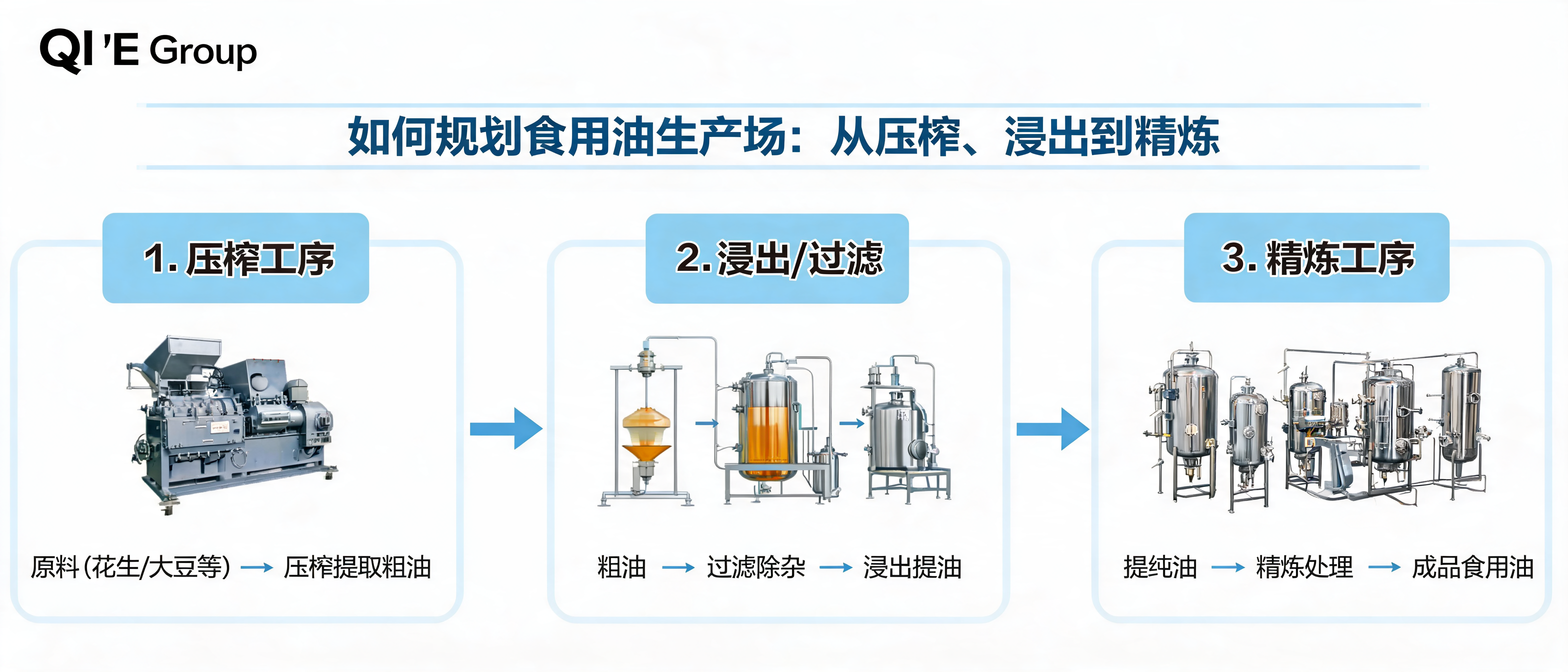
Capacity selection should cover more than the rated output of the press. A sesame oil production line works as a connected system: cleaning, seed preparation, pressing, oil clarification, storage, and optional refining must be balanced so that one stage does not unnecessarily restrict the rest of the line.
Sesame oil equipment can range from smaller processing units for limited daily throughput to industrial systems designed for substantially higher volumes. The actual capacity of a project should be confirmed against the selected model, raw material condition, process route, and operating schedule.
A press machine is the core extraction unit, but a complete sesame oil processing line may include several coordinated stages. The appropriate scope depends on whether the processor is producing crude oil, filtered oil, or oil requiring further refining.
Automation should reflect production scale, operator availability, process consistency needs, and maintenance capability. Semi-automatic equipment may suit operations that require flexible manual control, while automatic sesame oil processing equipment can help reduce repetitive handling and support more consistent workflow in continuous production.
Appropriate when operators need direct involvement in feeding, monitoring, and adjustments, or when the production plan requires flexible batch handling.
Appropriate when a processor aims to coordinate material movement and pressing workflow while reducing manual handling in recurring production activities.
For food processing, equipment selection should include practical cleaning access, routine inspection points, spare-parts planning, and safe material handling. Equipment designed for easier cleaning and maintenance can support hygienic operation and help processors maintain a more orderly production environment.
Selection principle: Choose sesame oil processing equipment as an integrated operating system. Raw material preparation, extraction method, capacity, automation, oil handling, refining requirements, environmental considerations, and after-sales support should be evaluated together.
Qi'e Grain and Oil Machinery Co., Ltd. provides oil pressing equipment, oil production line equipment, and oil refining equipment for processors evaluating sesame oil projects. Share your raw material conditions, target output, preferred processing method, automation expectations, and final oil requirements to support a more suitable equipment configuration.

 224
|
 Qi'e Grain and Oil Machinery sesame oil press machine sesame oil processing line oil extraction equipment oil processing equipment selection
 204
|
Qi'e Grain and Oil Machinery Co., Ltd. complete grain and oil processing equipment edible oil production line oil pressing equipment edible oil refining equipment
 78
|
Qi'e Grain and Oil Machinery Co., Ltd. edible oil processing equipment sesame oil pressing machine oil extraction equipment edible oil refining equipment
38
|
Qi'e Grain and Oil Machinery Co., Ltd. grain and oil machinery supplier oil processing equipment manufacturer production line engineering services equipment installation and commissioning
468
|
Qi'e Grain and Oil Machinery Co., Ltd. oilseed processing equipment efficient production environmental sustainability automation upgrades